
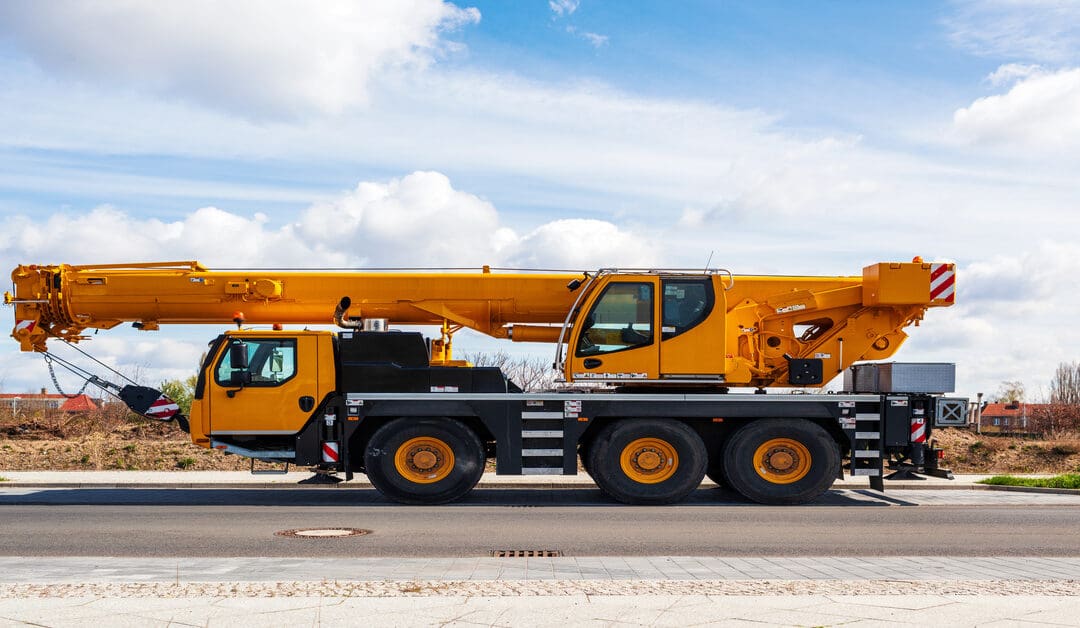
Every construction project comes with its own set of logistical challenges. One of the most critical decisions for project managers and site supervisors is selecting the right heavy-lifting equipment. Getting materials from point A to point B safely and efficiently can make or break a schedule, and choosing between a boom truck and a crane is a common dilemma.
Making the wrong choice can lead to project delays, safety hazards, and unnecessary budget overruns. For instance, hiring a massive crane for a job that requires the agility of a boom truck is a waste of resources.
So, let’s discuss the differences between boom trucks and crane rentals, and which one is right for you. By the end, you will have the knowledge needed to select the equipment that best aligns with your project’s scope and budget.
Understanding the Boom Truck
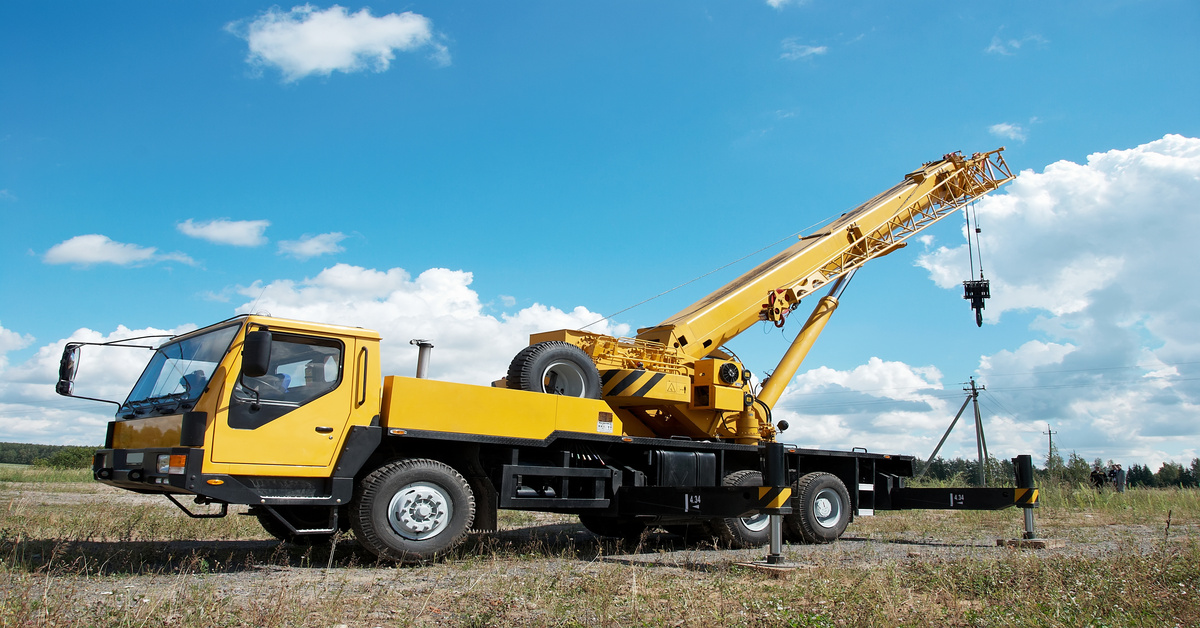
A boom truck is essentially a commercial truck chassis equipped with a hydraulic crane (the “boom”). This hybrid design offers a unique combination of transportation and lifting capabilities.
Because the crane sits on a standard truck body, these vehicles can travel at highway speeds, making them incredibly mobile and efficient for projects that require moving between multiple sites in a single day.
Key Features and Advantages
The primary advantage of a boom truck is its versatility. It is a dual-purpose vehicle that can haul materials to the site on its flatbed and then lift them into place. This eliminates the need for a separate transport vehicle and a crane, simplifying logistics and reducing rental costs.
Additionally, boom trucks generally have a smaller footprint than larger cranes. This makes them ideal for residential areas or crowded job sites where space is at a premium. They set up quickly, often requiring less ground preparation than their larger counterparts.
Ideal Applications for Boom Trucks
Boom trucks excel in specific scenarios where speed and moderate lifting capacity are priorities. Common uses include:
- HVAC Unit Installation: Lifting residential or light commercial air conditioning units onto rooftops.
- Truss Installation: Placing wooden trusses for residential home building.
- Signage Maintenance: Lifting personnel and materials for billboard or storefront sign installation.
- Material Transport: Delivering pallets of roofing shingles, drywall, or lumber directly to upper levels.
- Utility Work: Assisting in pole setting or transformer installation.
If your lift involves loads generally under 50 tons and requires frequent repositioning or highway travel, a boom truck is likely your most efficient option.
Understanding the Crane
When we talk about “cranes” in this comparison, we typically mean mobile hydraulic truck cranes or all-terrain cranes designed for heavy lifting.
Unlike boom trucks, which are trucks first and cranes second, these machines are engineered primarily for stability and massive lifting capacity. They can handle the heavy-duty tasks that exceed the safe working limits of a boom truck.
Key Features and Advantages
The defining characteristic of a dedicated crane is its counterweight system and outrigger footprint. These machines remain stable while lifting heavy loads at significant heights or radii.
They offer superior reach and capacity, allowing them to hoist materials to the tops of skyscrapers or lift heavy steel beams for commercial infrastructure projects.
While they may not travel as fast as a boom truck or carry their own cargo, their lifting charts are significantly more robust. They provide the precision and power necessary for complex, critical lifts where safety margins are tight.
Ideal Applications for Cranes
Cranes are the go-to solution for heavy industrial and large-scale commercial projects. Their ideal applications include:
- Steel Erection: Lifting and holding heavy steel beams for multi-story buildings.
- Concrete Pouring: Hoisting large concrete buckets for high-rise foundations or walls.
- Tower Crane Assembly: Assisting in the setup and dismantling of stationary tower cranes.
- Heavy Machinery Moving: Placing industrial generators, chillers, or manufacturing equipment.
- Bridge Construction: Lifting precast concrete segments or girders.
If your project involves extreme heights, heavy loads (over 40-50 tons), or a long reach radius, a dedicated crane is the right choice.
Critical Factors in Your Decision-Making Process
Choosing between a boom truck and a crane isn’t just about weight; it requires a holistic view of the job site conditions. Here are the main variables you must evaluate.
1. Load Weight and Dimensions
This is the starting point for any lift plan. You must know the exact weight of the object being lifted. Boom trucks are excellent for lighter loads, typically ranging from 10 to 50 tons depending on the model.
Cranes, however, can handle loads ranging from 50 tons to several hundred tons. Never guess the weight; always calculate it precisely to ensure you stay within the equipment’s load chart.
2. Height and Reach (Radius)
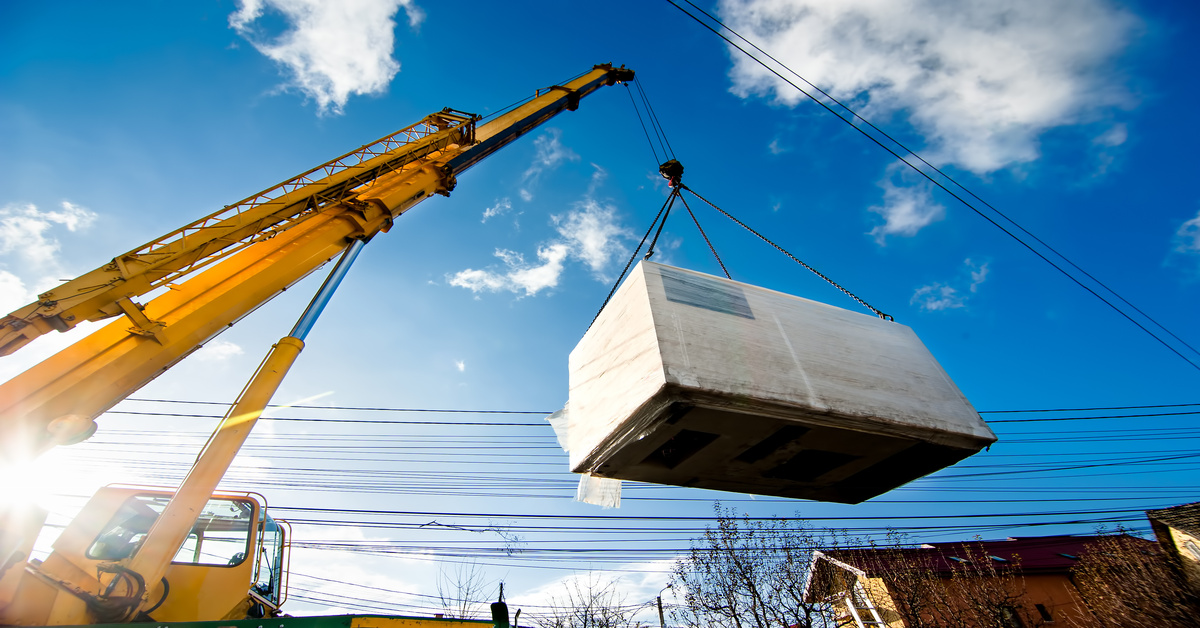
It is not enough to know how high you need to lift an object; you must also know how far away the crane will be parked from the placement point. This distance is the radius. As the radius increases (i.e., the farther the boom extends horizontally), the lifting capacity decreases significantly.
A boom truck might be able to lift a 5-ton AC unit, but not if it has to park 100 feet away from the building. Dedicated cranes generally maintain higher capacities at longer radii.
3. Site Accessibility and Ground Conditions
Can the equipment physically fit on the site? Boom trucks are more maneuverable and can navigate tight residential streets or busy parking lots with relative ease. Large cranes require significantly more space for setup, including a large area for outriggers to extend fully.
Furthermore, the ground must be stable enough to support the machine’s weight. Large cranes may require timber mats or special ground preparation to prevent sinking, adding time and cost to the project.
Making the Safe Choice for Your Project
The decision between a boom truck and a crane rental ultimately comes down to a balance of safety, efficiency, and cost. There is no one-size-fits-all answer, as every construction site presents unique challenges.
A boom truck offers agility, dual-purpose transport, and cost savings for lighter, standard lifts. A crane provides the brute strength, stability, and reach necessary for heavy industrial and commercial applications.
If you are unsure which piece of equipment best fits your needs, then consult with Heave Ho! Crane & Rigging. We offer a variety of crane rentals that can fit your project needs. As a leading Louisiana crane service, we have 30 years of experience and deliver with precision and efficiency. Contact us today for a quote.